7 Powerful Reasons Tinplate Rolls Are Preferred by Global Metal Wholesalers
High-Quality Tinplate Coils for Sustainable Packaging Solutions
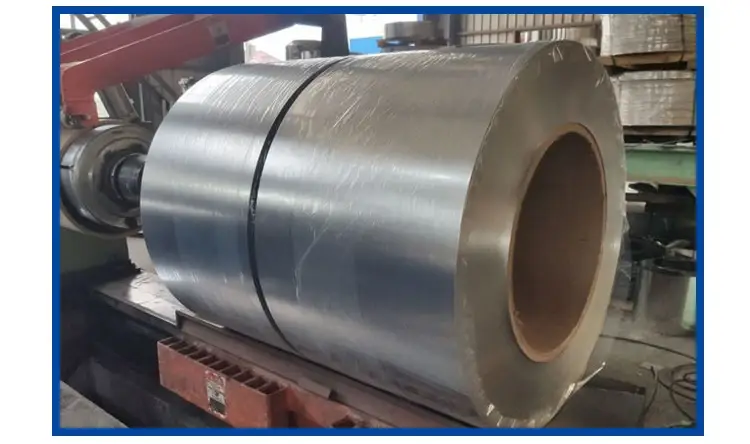
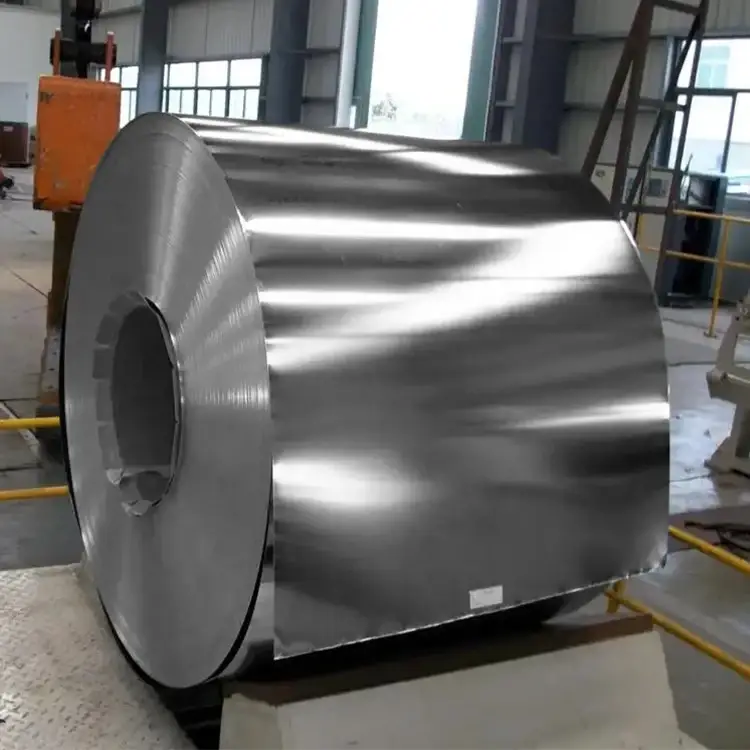
YRSM Metal’s tinplate coils are engineered for exceptional durability, corrosion resistance, and environmental sustainability—making them a trusted choice in the global tinplate packaging market. Each coil is produced under strict international standards to ensure consistent quality and reliable performance across food cans, aerosol containers, and general packaging applications.
Our food-grade ETP tinplate coils combine superior strength with excellent formability, enabling efficient production and long-term protection for packaged goods. As one of China’s leading tinplate manufacturers, YRSM Metal delivers solutions that balance functionality, sustainability, and cost-effectiveness—key priorities for modern packaging companies.
Moreover, tinplate coils are 100% recyclable and feature high recycled steel content, making them an integral part of the sustainable packaging supply chain. By choosing YRSM tinplate, you are investing in materials that support both product safety and global environmental goals.
| Thickness (mm) | Tin Coating (μm) | Tin Weight (g/m²) | Hardness Grades | Sustainability |
|---|---|---|---|---|
| 0.12–0.60 | 2.0–8.4 | 1.1–8.4 | T1–DR9 | Infinite recyclability, ISO 14001 certified |
Choosing YRSM tinplate for packaging means choosing long-term performance, reliable supply, and eco-friendly materials that meet the evolving demands of the global market.
Key Takeaways: Why Choose YRSM Tinplate Coils
- Superior Durability: YRSM tinplate coils protect your packaging from dents, corrosion, and transport damage—ensuring every product arrives in perfect condition.
- Enhanced Product Life: The tin coating forms a reliable barrier against rust and moisture, greatly extending the shelf life of packaged goods.
- 100% Recyclable: Our tinplate supports sustainable manufacturing through a closed-loop recycling system.
- Fully Customizable: Choose your grade, thickness, tin coating, and surface finish to meet your exact packaging needs.
- Certified Quality: YRSM tinplate packaging complies with ISO and international food safety standards, ensuring product integrity and consumer safety.
- Versatile Applications: Perfect for food cans, aerosol containers, cosmetics, and industrial packaging.
- Safe and Non-Toxic: Advanced BPA-free coatings maintain food safety under heat, pressure, and sterilization.
- Future-Ready: The market is shifting toward lightweight, customizable, and eco-friendly tinplate packaging—and YRSM leads this transformation.
Tinplate Coil Advantages
Durability and Physical Strength
YRSM tinplate coils deliver exceptional physical strength and dent resistance, making them ideal for global packaging applications.
Their cold-rolled steel core provides rigidity, while the tin coating enhances mechanical integrity.
This combination prevents deformation during transport and handling—ensuring that cans, containers, and lids retain their shape and seal quality.
Manufacturers choose YRSM tinplate for packaging because it offers consistent performance even under pressure.
From beverage cans to industrial packaging, our coils help protect your products and your brand reputation.
Longevity and Shelf-Life Protection
Longevity defines the YRSM tinplate coil.
Its dual-layer structure—steel for strength, tin for protection—ensures long-term durability and product safety.
Even after years of storage or sterilization, YRSM tinplate maintains its integrity without corrosion or surface degradation.
For food, beverage, and chemical industries, this means fewer spoilage risks and longer distribution cycles.
When global brands demand reliability, YRSM tinplate coils deliver unmatched performance that stands the test of time.
Corrosion Resistance and Tin Coating Technology
The tin coating acts as a precision-engineered shield against oxidation and chemical reactions.
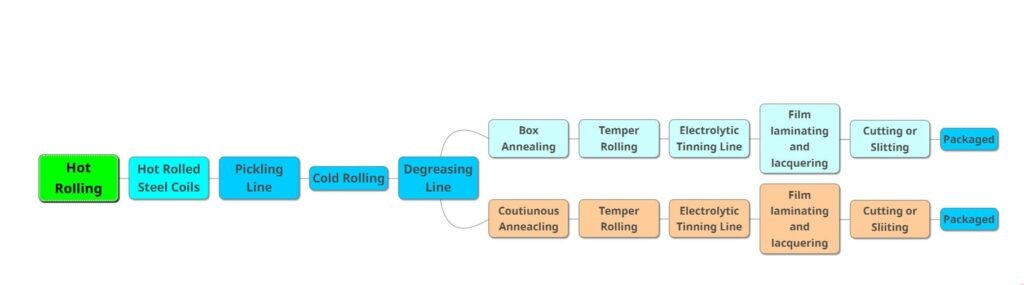
YRSM uses advanced electrolytic tin plating to achieve uniform coating thickness, superior adhesion, and a flawless surface finish.
This ensures:
- Resistance to oxygen and moisture ingress
- Safe long-term food preservation
- Compatibility with sterilization and high-heat processes
- Protection for oils, paints, and industrial materials
Every YRSM tinplate coil is produced under strict quality control and real-time monitoring, ensuring stability and performance across all environmental conditions.
Moisture Protection for Sensitive Goods
Moisture control is critical for food, pharmaceuticals, and chemical packaging.
YRSM tinplate coils form a tight moisture barrier, preventing humidity and water vapor from compromising product safety.
This ensures extended shelf life and preserves the original taste, texture, and quality of packaged contents.
Whether you are sealing beverages, powders, or industrial fluids, YRSM tinplate keeps them protected—inside and out.
Sustainability at the Core
YRSM is committed to green manufacturing and ISO 14001 environmental compliance.
Our tinplate coils are infinitely recyclable and produced with a high recycled steel ratio, supporting global efforts toward sustainable packaging.
By partnering with YRSM, you are not just choosing a material—you are investing in a responsible, future-focused packaging solution.
Solderability and Manufacturing Efficiency
YRSM tinplate coils provide excellent solderability, making the manufacturing process faster and more efficient for the global tinplate packaging industry.
The smooth and uniform tin coating allows for easy joining, forming, and shaping into a wide variety of packaging formats.
This high solderability ensures strong, leak-proof seams, which is critical for maintaining packaging integrity in food cans, aerosol containers, and chemical packaging.
Manufacturers benefit from reduced production time, improved seam strength, and consistent product quality across production batches.
YRSM tinplate coils also support a broad range of forming operations, including deep drawing, stamping, and seaming, giving packaging designers the flexibility to create customized shapes and sizes for different market demands.
This versatility makes YRSM tinplate an ideal material for both standardized industrial packaging and specialized custom containers.
Sealing Quality and Product Integrity
Sealing quality is one of the core strengths of YRSM tinplate coils.
Reliable sealing ensures that every can or container remains tightly closed, protecting its contents from external contaminants and preserving freshness.
The superior solderability of tinplate contributes directly to seam integrity, preventing leaks and maintaining product safety over time.
This property is especially valuable in the food and beverage sector, where airtight packaging is essential for shelf stability and consumer trust.
In the tinplate for packaging market, sealing performance directly impacts product quality and compliance with international safety standards—and YRSM tinplate consistently meets these expectations.
Customization Options for Industrial Packaging
YRSM Metal offers tailor-made tinplate coil specifications to match diverse industrial needs.
Manufacturers can customize every aspect—from mechanical strength to aesthetic finish—to meet the exact requirements of their packaging lines.
| Specification | Details |
|---|---|
| Material Grades | SPCC, MR |
| Tempers | T1, T2, T3, T4, T5, DR8, DR9 |
| Tin Coating | 1.1 to 11.2 g/m² |
| Thickness | 0.15 – 0.70 mm (±0.01 mm tolerance) |
| Surface Finishes | Bright, Stone, Silver, Matte, Gold Lacquered |
| Customization | Temper, Finish, Coating Weight, and Size |
These customization capabilities allow YRSM clients to optimize strength, formability, and corrosion resistance for specific end-use applications—whether for food cans, industrial containers, or premium specialty packaging.
Compliance and Quality Standards
International Standards
YRSM tinplate coils are produced in full compliance with major international standards, ensuring consistent quality, safety, and performance across global markets.
We adhere to strict benchmarks such as JIS G 3303, ASTM A623M, and DIN EN 10203, which define tinplate composition, coating thickness, and mechanical properties.
These standards guarantee that every YRSM tinplate coil maintains uniform surface finish, excellent formability, and superior corrosion resistance, meeting the high demands of the tinplate packaging industry.
Compliance is particularly critical for food and beverage packaging, where material consistency directly affects product safety and shelf life.
By maintaining stable mechanical and surface characteristics, YRSM tinplate coils ensure reliability during transport, sealing, and long-term storage.
In addition, our production processes follow ISO 9001 for quality management and HACCP for food safety control.
These certifications demonstrate our commitment to process consistency, hygiene, and risk prevention, providing confidence to our global partners and end users.
International Standards Reference
| Standard | Scope / Focus | How It Ensures Quality and Safety |
|---|---|---|
| JIS G 3303 | Composition, coating thickness, mechanical properties | Ensures consistent mechanical and surface performance, improving durability and safety |
| ASTM A623M | Steel base, tin plating amount, tempering, corrosion resistance | Provides detailed testing methods and technical benchmarks for stable quality |
| DIN EN 10203 | Composition and mechanical properties | Guarantees product uniformity and reliability in diverse packaging applications |
| ISO 9001 | Quality management system | Establishes strict process control and continuous improvement mechanisms |
| HACCP | Hazard analysis and critical control points | Prevents contamination and ensures product hygiene for food-grade packaging |
These international standards form the foundation of YRSM’s quality system, enabling us to deliver reliable, compliant tinplate coils that meet or exceed global packaging requirements.
Safety and Product Integrity
Safety is at the heart of YRSM’s tinplate production philosophy.
Our tinplate coils are designed to protect contents from contamination, oxidation, and physical damage—ensuring both product integrity and consumer safety.
YRSM follows globally recognized food safety management systems, including Codex Alimentarius, HACCP, and ISO 22000, to eliminate contamination risks during manufacturing, storage, and transport.
All tinplate surfaces are non-toxic, odor-free, and resistant to chemical reactions, making them suitable for packaging food, beverages, cosmetics, and sensitive industrial materials.
Cans and containers made from YRSM tinplate coils maintain secure barriers against moisture, oxygen, and pollutants, preserving freshness and extending shelf life.
Through continuous process optimization and preventive control, we ensure that every batch of YRSM tinplate meets the highest safety and compliance standards in the industry.
The global tinplate for packaging market depends on these safety assurances—and YRSM remains a trusted partner for manufacturers who demand both technical excellence and regulatory reliability.
Note: International standards support the tinplate packaging market by providing technical guidelines for composition, coating, and performance. This ensures that tinplate coils remain safe and effective for packaging sensitive goods.
Safety and Product Protection
At YRSM Metal, safety is a core priority in every stage of tinplate coil production.
Our tinplate coils are engineered to protect packaged goods from contamination, corrosion, and external damage—ensuring that products remain safe, clean, and stable throughout their lifecycle.
In the global tinplate packaging market, manufacturers depend on materials that meet the strictest food safety and hygiene standards.
YRSM complies with internationally recognized systems such as Codex Alimentarius, HACCP, and ISO 22000, which establish preventive controls and hygiene management across the entire production process.
These frameworks ensure that our tinplate products remain safe for direct contact with food, beverages, cosmetics, and other sensitive goods.
Our food-grade tinplate coils feature non-toxic, odor-free surfaces that resist chemical reactions and maintain purity even under high temperature or humidity.
This makes YRSM tinplate ideal for packaging applications that require long-term protection and consistent product quality.
Cans and containers made from YRSM tinplate coils form airtight, corrosion-resistant barriers, effectively blocking moisture, oxygen, and external pollutants.
These properties preserve freshness, extend shelf life, and maintain the integrity of products during transport and storage.
YRSM continuously improves its manufacturing systems through preventive control, quality audits, and material testing.
This ensures that every coil leaving our facility upholds the highest global safety standards—delivering reliable protection, regulatory compliance, and consumer trust.
Manufacturers across the tinplate for packaging market rely on these safety advantages to meet both international regulations and modern sustainability expectations.
By choosing YRSM tinplate, you invest in a material that protects not only your products but also your brand reputation and end-user confidence.
Packaging Applications
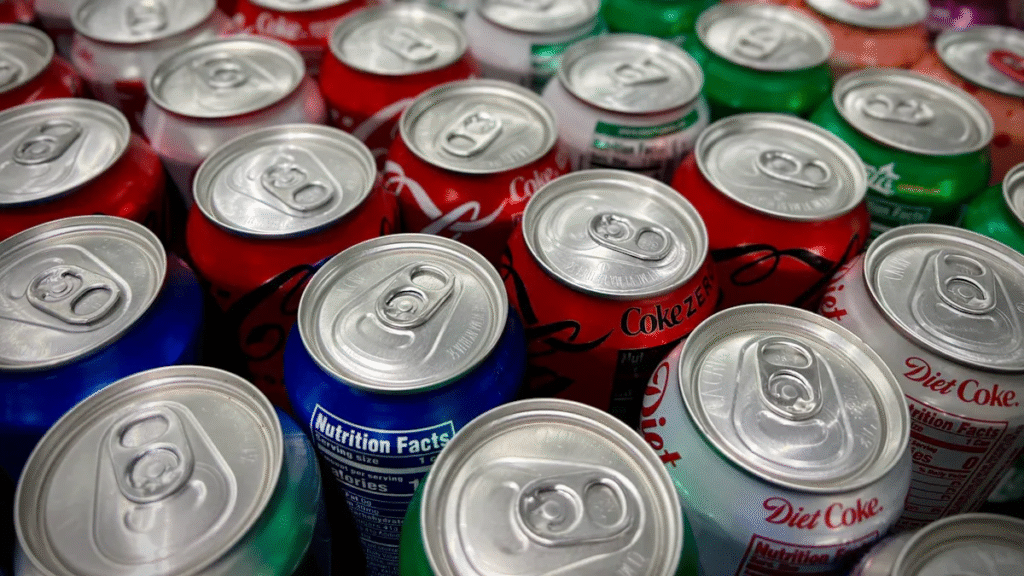
Applications of Tinplate Coils in Packaging
YRSM tinplate coils are a cornerstone of the tinplate for packaging market, providing unmatched versatility across multiple sectors.
Manufacturers rely on tinplate coils to produce cans, containers, and packaging solutions in a wide range of shapes, sizes, and specifications.
With customizable thickness, coating, and steel grade, YRSM tinplate coils can be tailored to meet the performance requirements of any application.
Food and Beverage Packaging
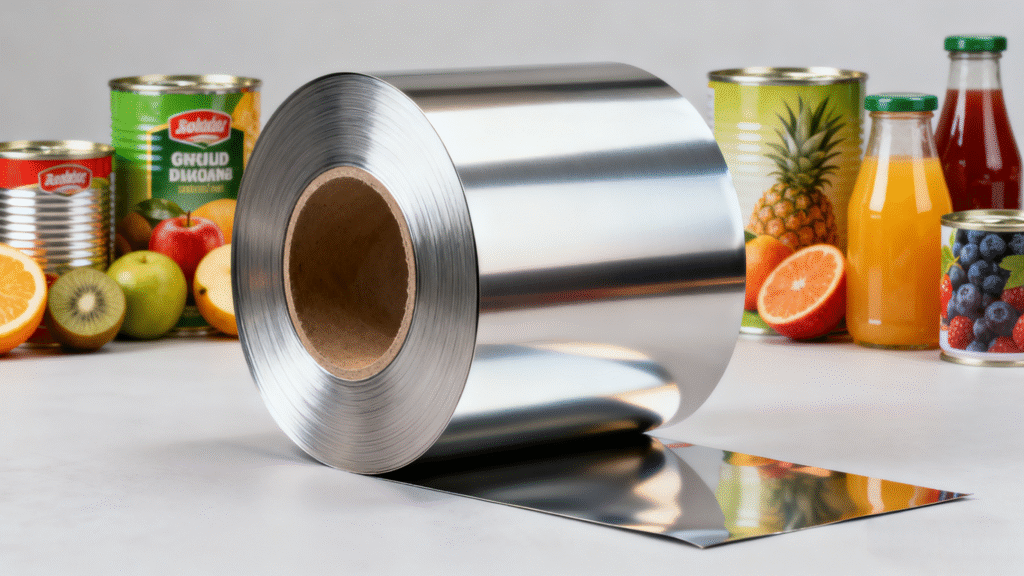
The food and beverage sector depends on tinplate coils for reliable protection, hygiene, and extended shelf life.
Cans made from YRSM tinplate deliver a strong barrier against oxygen, moisture, and light, preserving freshness, flavor, and nutritional quality.
Key Applications:
Juice – Airtight seals and moisture resistance keep juice safe during storage and transport, preventing spoilage and flavor loss.
Soft Drinks – Corrosion resistance and high formability protect carbonation and taste, ensuring premium beverage quality.
Coffee & Tea – Light-resistant and tightly sealed cans maintain aroma and prevent contamination, supporting product integrity.
The uniform tin plating ensures strong welds compatible with automated canning processes, contributing to consistent sealing and storage protection.
Industrial Packaging
Industrial applications demand materials that withstand harsh environments, chemical exposure, and transport stress.
YRSM tinplate coils provide the strength, corrosion resistance, and malleability necessary for storing chemicals, oils, and other industrial liquids.
Key Applications:
Chemicals – Leak-proof containers with superior corrosion resistance. Ideal for paints, solvents, and industrial chemicals.
Oils – Malleable, moisture-resistant containers in various shapes and sizes. Surface coatings enhance chemical resistance for long-term storage.
YRSM tinplate coils ensure industrial containers remain durable, safe, and reliable under demanding conditions.
Consumer Goods Packaging
Beyond food and industrial uses, tinplate coils are widely applied in cosmetics and multi-purpose containers, combining functional protection with aesthetic appeal.
Key Applications:
Cosmetics – Hygienic, chemically neutral containers that maintain product stability. Suitable for creams, lotions, and powders.
Multi-Purpose Buckets – Strong, light-resistant cans for general storage, offering durability, recyclability, and protection from contamination.
Application Summary
| Application Sector | Packaging Examples | Key Properties Demonstrated |
|---|---|---|
| Food and Beverage | Canned foods, beverage cans | Corrosion resistance, airtight seals, complex shapes |
| Industrial Packaging | Paint, chemical, oil containers | Custom thickness, malleability, durability |
| Consumer Goods | Cosmetic jars, multi-purpose buckets | Hygienic, stable, light-resistant |
Yrsmmetal tinplate coils continue to drive innovation in the tinplate packaging market, supporting food and beverage, industrial, and consumer goods sectors with reliable performance, flexible design, and sustainable solutions.
Sustainable Packaging with YRSM Tinplate Coils
YRSM tinplate coils offer an ideal combination of recyclability, non-toxic properties, and decorative appeal, making them a preferred choice for eco-friendly packaging in the tinplate for packaging market.
Manufacturers seeking sustainable solutions rely on tinplate for its durability, resource efficiency, and ability to meet consumer expectations for environmentally responsible products.
Recyclability and Circular Economy
Tinplate supports closed-loop recycling systems, allowing used packaging to be collected, processed, and reintroduced into new products without loss of quality.
This process conserves resources, reduces landfill waste, and aligns with circular economy principles, making tinplate a sustainable material of choice.
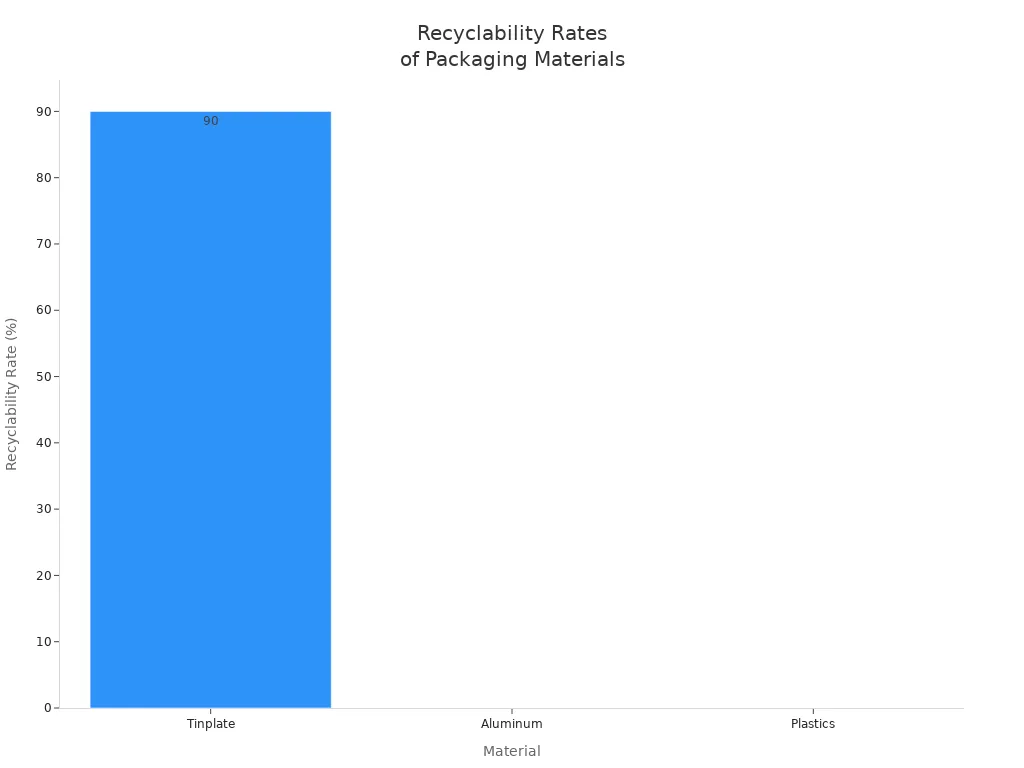
Industry recyclability rates:
| Material | Recyclability Rate (%) | Circular Economy Contribution |
|---|---|---|
| Tinplate | 80–90 | Closed-loop, infinite cycles |
| Aluminum | 65–75 | High, but energy-intensive |
| Plastics | 10–30 | Limited, often downcycled |
Innovations such as eco pickled surfaces and insoluble anodes improve tinplate quality while enhancing recyclability, further supporting sustainable packaging solutions.
Non-Toxic and Safe Materials
YRSM tinplate coils feature BPA-free, food-safe coatings that comply with FDA standards, even under high-temperature or acidic conditions.
These coatings ensure chemical stability, prevent contamination, and maintain product safety throughout storage and transport.
Key benefits of YRSM tinplate coatings:
- Non-toxic, odor-free, and chemically neutral
- Resistant to high temperatures, moisture, and corrosive environments
- Suitable for food, beverage, and sensitive industrial packaging
Resource Efficiency and Lightweight Solutions
YRSM prioritizes energy efficiency, water conservation, and material optimization in tinplate coil production.
Advanced manufacturing technologies and lightweight designs reduce raw material usage, transportation costs, and greenhouse gas emissions, supporting sustainable packaging goals.
Life cycle assessments confirm that material choice and packaging mass significantly influence environmental impact.
By using recycled content and lightweight tinplate, manufacturers can achieve both functional packaging and reduced ecological footprint.
Eco-Friendly Coatings and Food Safety
BPA-free and low-VOC coatings enhance both environmental performance and product safety.
These coatings create non-reactive, food-safe surfaces, prevent chemical interactions, and comply with FDA regulations.
Key contributions of eco-friendly coatings:
| Coating Type | Description | Contribution to Sustainable Packaging |
|---|---|---|
| Water-Based & Solvent-Free | Avoids harmful solvents, reduces emissions | Supports sustainability and aesthetics |
| UV-Curable Inks | Instant curing without solvents | Lowers VOCs, enhances durability |
| Multi-Polymer, BPA-Free | Combines polymers for food safety | Extends lifespan and ensures consumer safety |
YRSM tinplate packaging provides excellent corrosion resistance, airtight sealing, and long-term protection against light, air, and moisture, making it ideal for food-grade and industrial applications.
Decorative Appeal and Brand Value
Tinplate coils also support premium packaging design, enhancing brand visibility and consumer engagement.
Advanced printing, embossing, and digital customization allow manufacturers to create vibrant, durable, and reusable packaging, combining aesthetic appeal with sustainability.
Reusable tinplate containers extend brand exposure while promoting eco-conscious consumer behavior, making tinplate an attractive material for modern, environmentally responsible packaging.
Tinplate Coils vs. Alternative Packaging Materials
Selecting the right material for industrial and consumer packaging requires balancing cost, performance, and sustainability.
YRSM tinplate coils are widely used due to their unique combination of durability, corrosion resistance, food safety, and recyclability, but aluminum, plastics, and other metals each offer distinct advantages.
Understanding these differences helps manufacturers make informed decisions and align with both industry trends and environmental regulations.
Cost and Logistics Comparison
Tinplate packaging offers a cost-effective solution for bulk storage and heavy-duty applications. Its lower material cost makes it ideal for large-scale production, though its heavier weight can increase transportation expenses.
Aluminum, by contrast, has a higher initial cost but is lighter, reducing shipping and handling expenses—especially for long-distance transport or lightweight consumer goods.
| Aspect | Tinplate Packaging | Aluminum Packaging |
|---|---|---|
| Material Cost | More cost-effective for bulk storage | Higher initial cost |
| Weight | Heavier, may increase transport costs | Lightweight, reduces shipping expenses |
| Transportation Cost | Higher due to weight | Lower due to lightness |
| Durability | Excels in heavy-duty shipments | Good corrosion resistance, versatile |
| Sustainability | Highly recyclable, supports circular economy | Infinitely recyclable, energy-intensive |
Performance Comparison
YRSM tinplate coils provide superior durability, corrosion resistance, and sealing quality. The steel core resists denting and puncturing, while the tin coating prevents rust and oxidation—ensuring long-term protection for packaged goods.
Aluminum, while lightweight, is more prone to dents and punctures, and its corrosion resistance is lower than tinplate. For products requiring extended shelf life, airtight sealing, and food safety compliance, tinplate coils remain the preferred choice.
| Aspect | Tinplate Coils (Electrolytic Tinplate) | Aluminum |
|---|---|---|
| Durability | High strength, resists denting and puncturing | Lighter, more prone to damage |
| Corrosion Resistance | Excellent, prevents rust and oxidation | Less resistant, vulnerable to oxidation |
| Sealing Quality | Airtight seals, preserves freshness | Less effective barrier |
| Food Safety | Meets strict standards, no harmful leaching | May not meet all certifications |
| Recyclability | Highly recyclable, low carbon footprint | Recyclable, higher energy use |
Market Comparison and Trends for Tinplate Coils
Selecting the right packaging material requires balancing cost, performance, sustainability, and regulatory compliance.
YRSM tinplate coils outperform plastics and other metals in durability, recyclability, and food safety, making them a preferred choice for industrial and consumer packaging.
Plastics vs. Tinplate
Environmental Impact
Plastic packaging poses significant environmental challenges. Global plastic production exceeds 400 million tons annually, yet recycling rates remain low. Most plastics end up in landfills or oceans, degrading into microplastics and harming ecosystems. Plastic is fossil fuel-based, contributing to climate change.
In contrast, tinplate coils are 100% recyclable, support circular economy goals, and reduce the demand for plastics and paper—helping manufacturers conserve natural resources and align with sustainability trends.
Protection and Food Safety
Tinplate provides a superior barrier against moisture, light, and oxygen, preserving nutritional value, freshness, and safety of packaged goods.
Plastics, while lightweight and versatile, may leach chemicals under heat or sunlight and offer less effective protection. Tinplate’s airtight seal ensures extended shelf life and reliable product integrity.
Other Metals: Aluminum and Tinplate
Weight and Durability
Tinplate, made from low-carbon steel coated with tin, is heavier than aluminum, which increases transportation costs but provides superior strength and stability. Aluminum is lightweight but less durable and more prone to dents and corrosion.
| Metal Type | Weight Characteristics | Durability Characteristics |
|---|---|---|
| Tinplate | Heavier than aluminum | Strong, corrosion-resistant, ductile |
| Aluminum | Lightweight | Weaker, more prone to damage |
Performance
Tinplate excels in ductility, drawability, and corrosion resistance, maintaining structural integrity during transport and storage. Other metals may compromise product protection in demanding conditions, making tinplate the preferred material for long-term industrial packaging.
Market Trends in Tinplate Packaging
Lightweighting
Manufacturers are producing tinplate coils below 0.15mm thickness, reducing material use by up to 20% while retaining strength. Lightweight tinplate lowers transportation costs and appeals to sectors like food, beverage, and cosmetics.
The global tinplate packaging market is projected to grow from USD 1.97 billion in 2025 to USD 3.11 billion by 2034, highlighting lightweighting as a key strategy for future growth.
Smart Packaging
Automation and workflow integration improve efficiency and quality control. Advanced coatings, such as PVC- and bisphenol-free options, enhance food safety and regulatory compliance.
Digital printing and interactive features like QR codes allow packaging to engage consumers, supporting smarter and sustainable packaging solutions.
Customization and Branding
Tinplate’s malleability enables intricate shapes, vibrant colors, embossing, and debossing, supporting premium food, beverage, cosmetics, and pharmaceutical packaging.
Custom designs enhance brand recognition, shelf appeal, and consumer engagement. For example, Heineken’s limited-edition tinplate cans achieved a 31% sales increase in 2023.
Design Flexibility
Tinplate supports matte, glossy, and textured finishes and interactive packaging solutions such as AR markers, allowing brands to combine aesthetic appeal with protective performance.
Regulatory Drivers
Compliance with regulations shapes market adoption and packaging innovation.
European standards, food safety directives, and environmental mandates influence design, material choice, and manufacturing processes.
| Regulatory Driver | Impact on Tinplate Packaging |
|---|---|
| Food Safety Standards | Prevent contamination, ensure hygiene |
| Extended Producer Responsibility (EPR) | Encourage recyclable designs |
| Recycled Content Mandates | Promote use of recycled materials |
| Plastic Taxes | Incentivize sustainable alternatives |
| Carbon Pricing | Reduce carbon footprint in production |
Consumer Demand and Market Outlook for Tinplate Coils
Consumer preference for sustainable packaging continues to shape market trends globally. Regions such as China, India, and the US show increasing demand for eco-friendly solutions in food, beverage, and automotive sectors, while European markets are increasingly adopting recyclable tinplate packaging.
Urbanization, health-conscious lifestyles, and the growth of ready-to-eat meals further drive demand for durable, safe, and sustainable packaging. YRSM tinplate coils meet these expectations through high recyclability, corrosion resistance, and versatile applications, supporting brand loyalty and market expansion.
Key Insights:
- Tinplate recycling rates exceed 80%, aligning with circular economy and sustainability goals.
- Transitioning from plastics to tinplate reduces waste and carbon footprint, meeting environmental regulations.
- The future of tinplate coils in industrial packaging is strong, fueled by trends in lightweighting, smart packaging, customization, and regulatory compliance.
Advantages of YRSM Tinplate Coils
- Superior strength and corrosion resistance for long-lasting product protection
- High recyclability, supporting circular economy and sustainable packaging initiatives
- Advanced coatings and excellent printability for branding and customization
- Versatile applications across food, beverage, industrial, and consumer goods sectors
YRSM’s Lattine Banda Stagnata tinplate coil is recognized for its reliability, adaptability, and premium quality, making it ideal for manufacturers aiming to meet modern sustainability and innovation goals.
FAQ: Tinplate Coils
1. What is a tinplate coil?
A tinplate coil is cold-rolled steel coated with pure tin on both sides. It is used to manufacture packaging for food, beverages, chemicals, and consumer goods. The tin layer provides corrosion resistance and an attractive finish.
2. Why do manufacturers prefer tinplate coils for packaging?
Tinplate coils are chosen for their durability, corrosion resistance, and recyclability. They meet international standards and can be customized by grade, temper, thickness, and finish for safe and sustainable packaging.
3. How does tinplate improve food safety?
Tinplate coils provide a non-toxic protective barrier, preventing contamination. Food-grade coatings comply with FDA and HACCP standards, maintaining integrity during storage and transport.
4. Can tinplate coils be recycled?
Yes. Tinplate coils are 100% recyclable. The steel and tin composition allows repeated recycling without quality loss, supporting circular economy initiatives.
5. What industries use tinplate coils?
Industries such as food & beverage, chemicals, cosmetics, and household goods rely on tinplate coils for mechanical protection, moisture resistance, and decorative packaging.
6. What customization options are available?
Manufacturers can choose from multiple grades, tempers, thicknesses, and finishes. Options include bright, matte, stone, and silver surfaces to optimize performance for specific applications.
7. How do tinplate coils compare to aluminum and plastics?
Tinplate coils offer higher durability, better corrosion resistance, and superior food safety compared to aluminum and plastics. They also support higher recyclability rates and provide a more effective barrier against moisture, light, and oxygen.
Material Performance Comparison
| Feature | Tinplate Coil | Aluminum | Plastics |
|---|---|---|---|
| Durability | High | Medium | Low |
| Recyclability | High | High | Low |
| Food Safety | Excellent | Good | Varies |